
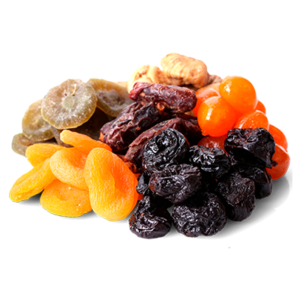
"Simple but challenging" fits fruit and vegetables well. The advice to eat more of them is easy to state. Doing it every day is the challenging part. A 2021 paper in the journal Circulation, by Dong Wang and colleagues, tried to pin down a daily number by asking a plain question: at what daily intake of fruit and vegetables were death rates lowest, and does eating more than that add anything?
This is general reading about food habits. It is not personal dietary advice.
Two cohorts and a meta-analysis
The team followed 66,719 women in the Nurses' Health Study (1984 to 2014) and 42,016 men in the Health Professionals Follow-up Study (1986 to 2014). All of them were free of certain major illnesses at the start of the analysis. Diet was measured with a food-frequency questionnaire at the start and updated every 2 to 4 years, and 33,898 deaths were recorded during follow-up.
The questionnaire asked how often people ate a standard portion of each fruit and vegetable. The paper's examples of a portion are half a cup of strawberries, 1 banana and half a cup of cooked spinach.
The authors then pooled their two cohorts with 24 other prospective cohort studies in a dose-response meta-analysis. That larger set covered 1,892,885 participants and 145,015 deaths.
The simple part: the number is five
Intake of about 5 servings a day, or 2 servings of fruit and 3 of vegetables, was associated with the lowest mortality. Above that level, higher intake was not associated with additional risk reduction. Compared with the reference level of 2 servings a day, 5 servings came with a hazard ratio of 0.87 (95% CI 0.85 to 0.90) for death from any cause. The meta-analysis gave the same summary figure: a risk ratio of 0.87 (0.85 to 0.88) for 5 servings a day.
Five is also a familiar figure. The paper notes that the World Health Organization and the National Health Service of England are among the bodies that recommend five servings a day, while the recommendations are six in Denmark and 8.5 in Australia.
The challenging part: getting there, and what counts
The gap is the hard bit. The paper puts current average intake among US adults at one serving of fruit and 1.5 servings of vegetables a day, roughly half the level linked with the lowest mortality.
Not every item followed the same pattern. Higher intakes of most subgroups, including green leafy vegetables, citrus fruit and fruit and vegetables rich in vitamin C or beta carotene, were associated with lower mortality. Starchy vegetables such as peas and corn were not. Fruit juices and potatoes were not associated with total or cause-specific mortality. The authors conclude that their findings support advice to eat more fruit and vegetables, "but not fruit juices and potatoes".
Then there are the limits the authors list themselves. The study was observational, so causality cannot be established. People at the higher intake levels may have over-reported what they ate, which makes it harder to tell five servings apart from more than five.
Where dates come in
The paper does not report dates or dried fruit as a separate group, so it says nothing about them directly. The NHS has its own rule. Its page "5 A Day: what counts?" says 30g of dried fruit (this is equivalent to around 80g of fresh fruit) counts as 1 portion of your 5 A Day, and that dried fruit should be eaten at mealtimes, not as a between-meal snack, to reduce the risk of tooth decay.
The same NHS page also limits juice. It says 150ml of fruit juice, vegetable juice or smoothie only counts once in a day, and limits the combined total to 150ml. So a 30 g portion of dates eaten with breakfast or with dinner can take one of the five slots, while a second glass of juice cannot.
For more on everyday food choices, see how five junk foods and their substitutes score on the NHS label cut-offs, or the energy density guide that tests dates against fresh fruit. If a big family meal is coming up, there are food storage tips for a crowded kitchen. Who runs this site is on the About us page.