
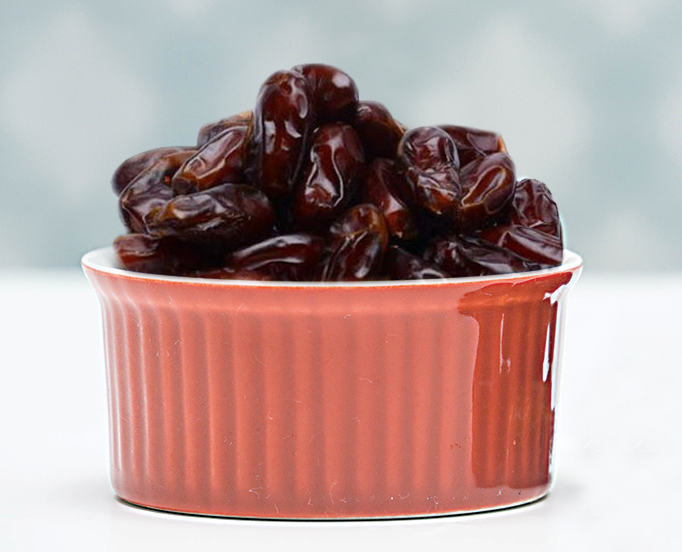
Sayer and Mariami are both Iranian dates, both soft-textured, and both frequently confused by first-time buyers — but they come from different regions and serve different purposes on a plate.
Sayer is grown mainly in Khuzestan, in the south-west of Iran, and is one of the country's highest-volume commercial varieties. It's reddish-brown, very soft once cured, and so sweet that a large share of the harvest goes straight into date paste, syrup and vinegar production rather than being sold as whole fruit. Mariami, by contrast, is grown further east and is usually marketed as a premium whole-fruit snacking date — bigger, glossier, and priced accordingly.
Iranian Sayer dates that do reach the retail shelf as whole fruit tend to be the better-graded portion of the crop: larger pieces, more even colour, less broken. Even at that grade, Sayer's flavour leans toward molasses-like sweetness rather than the cleaner caramel notes people associate with Mariami or Medjool, and the texture is noticeably stickier underfoot.
If you're deciding between the two for a specific use: Sayer is the better economical choice for cooking, baking, or making your own date paste at home, since the softness means it blends down easily with minimal soaking. Mariami holds its shape better and looks more presentable in a gift box or dessert platter, which is why it commands a higher retail price per kilo.
Storage differs slightly too — Sayer's higher moisture content means it needs refrigeration sooner than a firmer variety if you're not going through it quickly, whereas Mariami tolerates a few extra days at room temperature before the texture starts to change.
Neither is objectively "better" — it depends on what you're using it for. Compare both varieties directly in our Sayer Dates and Kurma Mariami Malaysia categories, or see the full range of premium dates on the home page.