
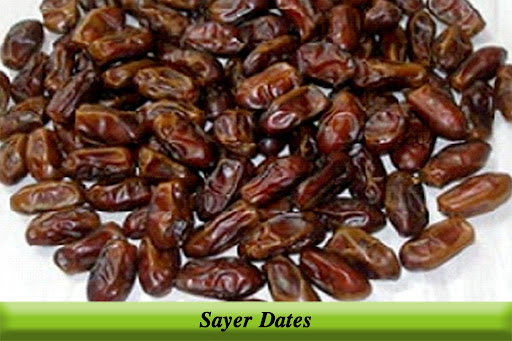
If a dessert recipe calls for "dates," it usually matters which one — and Sayer and Mariami behave differently enough in the kitchen that swapping one for the other changes the result.
Mariami is grown further east than Sayer's home region of Khuzestan, and it's usually sold and priced as a premium whole-fruit date — big, glossy, and firm enough to slice or stuff. Sayer is softer, stickier, and much cheaper, and a large share of any Sayer harvest is processed into dates syrup or paste rather than sold as whole fruit at all.
For desserts, that difference decides which one to reach for. Stuffing dates with nuts or cheese and serving them whole calls for Mariami — it holds its shape and looks better on a plate. Making a smooth date paste for a cake, a sticky toffee pudding base, or a natural sweetener for energy balls calls for Sayer instead. Sayer dates blend down faster and cheaper, and the flavour — closer to molasses than Mariami's cleaner caramel — actually suits a baked dessert better, where a deep sweetness reads as richness rather than sharpness.
Texture is the other practical factor. Mariami's firmer bite works in a fresh fruit salad or as a garnish where you want the piece to stay intact. Sayer's soft, almost jammy texture means it's harder to slice cleanly but far easier to mash, blend, or simmer down — exactly what you want for a sauce or syrup base.
Price-wise, Sayer is the more budget-friendly choice for any recipe using dates as an ingredient rather than a standalone piece, which matters if you're cooking in volume rather than plating individual pieces.
If you're comparing the two for a specific recipe, or looking at what else is available, browse both in our Sayer Dates category, compare against Medjool dates, or see the full range on the home page.