
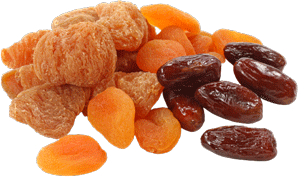
The idea that a particular diet plan makes menopause easier is worth checking against the research. Research on food and menopause symptoms gives a more careful answer. Below is the NHS advice, what several diet and soy studies found, and what has, and has not, been tested with dates.
NHS advice on eating during menopause
The NHS guide to things you can do to help menopause and perimenopause symptoms states that eating well, exercising and looking after your mental wellbeing can help with symptoms. Its food tips are to try to eat a healthy, balanced diet and to eat calcium-rich food like milk, yoghurt and kale, if you can, to keep your bones healthy.
To help with hot flushes and night sweats, the guide suggests cutting down on possible triggers like spicy food, caffeine, hot drinks, smoking and alcohol, along with exercising regularly and keeping to a healthy weight. For your bones it recommends plenty of fruit, vegetables and sources of calcium, strength exercises, getting some sunlight on your skin, and vitamin D supplements.
Weight gain during perimenopause and menopause is common, the NHS symptoms page explains, and symptoms usually last for 7 to 9 years, sometimes longer.
Was it the food or the weight loss?
In the US, the Women's Health Initiative Dietary Modification trial tested a diet aimed at reducing fat and eating more fruit, vegetables and whole grains. A 2012 analysis of that trial by Kroenke and colleagues covered 17,473 postmenopausal women aged 50 to 79, none of them taking menopausal hormone therapy, and looked at hot flashes and night sweats.
For women with these symptoms at baseline, the diet group was more likely to see the symptoms go (odds ratio 1.14). So were women who lost 10% or more of their baseline weight by year 1, compared with women whose weight stayed the same (odds ratio 1.56).
For moderate or severe symptoms, the result was different. Large weight loss, more than 22 lb, was related to those symptoms ending, but the dietary changes were not. The authors only went as far as saying that weight loss within a healthy dietary change "may help".
Low-fat vegan eating plus soybeans
Barnard and colleagues, of the Physicians Committee for Responsible Medicine, tested a low-fat vegan diet with half a cup (86 g) of cooked soybeans daily in two randomised trials. Each trial lasted 12 weeks, with a control group that made no diet changes.
The first, published in 2021, had 38 postmenopausal women reporting two or more hot flashes a day. In the diet group total hot flashes went down 79%, against 49% for the controls. For moderate to severe hot flashes the figures were 84% and 42%.
The second, published in 2023, included 84 postmenopausal women with at least two moderate to severe hot flashes daily. These fell 88% on the diet and 34% in the control group. At 12 weeks, 50% of the women who finished the diet arm had no moderate to severe hot flashes left.
Diet and soybeans were given together and compared with no change, which means neither trial can separate the effect of one from the other.
A nine-year study of Australian women
A prospective cohort study by Herber-Gast and Mishra (2013) followed 6,040 Australian women who had a natural menopause for 9 years. Those in the highest fifth for a fruit eating pattern (odds ratio 0.81) or a Mediterranean-style pattern (0.80) had lower odds of hot flushes and night sweats than those in the lowest fifth. A pattern high in fat and sugar raised the risk (1.23). Observational data of this kind point to an association, not proof of cause.
What isoflavone supplement trials found
Taku and colleagues (2012) brought together double-blind randomised trials that compared extracted or synthesised soy isoflavones with placebo. At a median 54 mg a day for 6 weeks to 12 months, hot flash frequency fell 20.6% and severity fell 26.2% more than with placebo.
A JAMA review by Franco and colleagues (2016) took in 62 studies and 6,653 women. Phytoestrogens were associated with 1.31 fewer daily hot flashes and lower vaginal dryness scores, though not with fewer night sweats. Since 46 of the trials (74%) showed a high risk of bias in 3 or more areas, the authors described the reductions as "modest" and asked for more rigorous studies.
Before taking herbal supplements or complementary medicines, the NHS advises talking to a doctor.
What one review found on dates and menopause
A 2025 systematic review by Shirdel and colleagues covered 21 studies of date fruit products and female health. According to the full text, three were at the menopause stage, and just one of those three used the fruit.
In that 2023 trial, run by Kurniawan in Indonesia, 44 perimenopausal women aged 42 to 48 were studied. One group ate seven Ajwa dates (60 to 80 g) every day for 8 weeks, and the other had no intervention. The review reports that anti-Mullerian hormone (AMH) dropped less in the date group, which it takes as better maintenance of ovarian reserve.
The remaining two trials used capsules of date palm pollen extract rather than the fruit. Loripoor and colleagues randomised 110 postmenopausal women to a 300 mg capsule or placebo for 4 weeks, and found the extract "had no effect on improving sexual disorders". In the review's table, the other pollen trial (60 women, 5 weeks) is listed as significant for vaginal lubrication and pain during sex.
No hot flush, night sweat or sleep outcome was measured in these three studies. Although the abstract says date products helped with dyspareunia in menopause, the review's table links that result to a pollen capsule trial.
How dates fit into balanced eating
In the NHS 5 A Day guide, a 30g portion of dried fruit such as dates counts as 1 of your 5 A Day. The guide adds that dried fruit should be eaten at mealtimes, not as a snack between meals, to reduce the impact on teeth.
Dates are high in sugar and contain little calcium. For Medjool dates, USDA FoodData Central record 168191 lists 66.5 g of total sugars and 64 mg of calcium in 100 g. The NHS calcium page puts adult needs at 700mg a day, which means 100 g of Medjool dates covers less than a tenth. Sources of calcium on that page include milk, cheese and other dairy foods, green leafy vegetables such as curly kale, soya drinks with added calcium, and fish where you eat the bones.
When the NHS says to see a GP
Contact a GP, says the NHS, if you think you have symptoms of menopause or perimenopause and want to know what your options are, or if you have symptoms like a fast heartbeat. The same applies if you have not had a period for 12 months or more and you have any vaginal bleeding.
More about this site is on the About Us page and the contact page.
This article is general information, not medical advice. Please talk to a GP or pharmacist about menopause symptoms and before you start any supplement.
References
- NHS. Things you can do to help menopause and perimenopause symptoms. nhs.uk
- NHS. Symptoms of menopause and perimenopause. nhs.uk
- Kroenke CH, Caan BJ, Stefanick ML, et al. Effects of a dietary intervention and weight change on vasomotor symptoms in the Women's Health Initiative. Menopause. 2012;19(9):980-8. PMID 22781782
- Barnard ND, Kahleova H, Holtz DN, et al. The Women's Study for the Alleviation of Vasomotor Symptoms (WAVS): a randomized, controlled trial of a plant-based diet and whole soybeans for postmenopausal women. Menopause. 2021;28(10):1150-1156. PMID 34260478
- Barnard ND, Kahleova H, Holtz DN, et al. A dietary intervention for vasomotor symptoms of menopause: a randomized, controlled trial. Menopause. 2023;30(1):80-87. PMID 36253903
- Herber-Gast GC, Mishra GD. Fruit, Mediterranean-style, and high-fat and -sugar diets are associated with the risk of night sweats and hot flushes in midlife: results from a prospective cohort study. Am J Clin Nutr. 2013;97(5):1092-9. PMID 23553160
- Taku K, Melby MK, Kronenberg F, Kurzer MS, Messina M. Extracted or synthesized soybean isoflavones reduce menopausal hot flash frequency and severity: systematic review and meta-analysis of randomized controlled trials. Menopause. 2012;19(7):776-90. PMID 22433977
- Franco OH, Chowdhury R, Troup J, et al. Use of plant-based therapies and menopausal symptoms: a systematic review and meta-analysis. JAMA. 2016;315(23):2554-63. PMID 27327802
- Shirdel E, Rahimi F, Jafarzadeh M, Abdi F, Rahnemaei FA. Improving female health at various life stages: a systematic review of the impact of date fruit products. Sultan Qaboos Univ Med J. 2025;25(1):38-49. PMID 40641695
- Loripoor M, Esmaeili F, Vazirinejad R, Dan S. The effect of palm pollen extract on sexual disorders in postmenopausal women: a randomized clinical trial. Int J Community Based Nurs Midwifery. 2023;11(1):14-22. PMID 36650842
- U.S. Department of Agriculture. FoodData Central, SR Legacy 168191: Dates, medjool. fdc.nal.usda.gov
- NHS. 5 A Day: what counts? nhs.uk
- NHS. Calcium. nhs.uk