
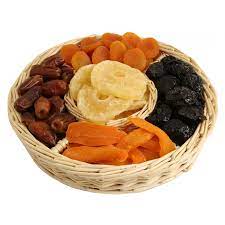
Is natural acne therapy the very best option? The research is smaller and more mixed than that question suggests. This article goes through four trials of natural products on acne, what the NHS recommends first, and what PubMed holds on dates and acne. In short, tea tree oil gel showed some benefit, aloe vera helped only as an add-on to a medicine, and a honey product showed no clear gain. Nothing here shows that natural is the very best.
Please treat this as general information, not medical advice. See a pharmacist or GP about acne that is deep, painful, scarring or not getting better.
Start with the basics
According to the NHS, there are things you can do yourself. Wash your skin twice a day with a gentle cleanser and remove make-up at the end of the day. Pick skincare and make-up labelled non-comedogenic, which means it will not clog pores. You can also try a treatment you put on your skin, such as salicylic acid or benzoyl peroxide, and speak to a pharmacist for advice. Don't pick or squeeze spots, because this can cause scars, and don't scrub your skin, because this can irritate it and make acne worse (NHS).
Tea tree oil gel versus a placebo
Researchers at Isfahan University of Medical Sciences in Iran ran a randomised, double-blind trial in 60 patients with mild to moderate acne. Thirty used a tea tree oil gel and thirty used a placebo, with check-ups every 15 days for 45 days. Compared with placebo, the tea tree oil gel gave significantly better results on the total lesion count and on an acne severity index. Side effects were relatively similar and tolerable in both groups (Enshaieh et al., 2007).
Tea tree oil gel versus benzoyl peroxide
An older single-blind, randomised trial, by researchers at the Royal Prince Alfred Hospital in Camperdown, New South Wales, included 124 patients with mild to moderate acne. Some used 5% tea tree oil gel and others 5% benzoyl peroxide lotion. Each treatment significantly reduced inflamed and non-inflamed lesions. Tea tree oil started working more slowly, and its users had fewer side effects (Bassett et al., 1990).
The trade-off, then, was speed for comfort. The study does not report tea tree oil doing better than benzoyl peroxide at clearing spots.
Honey on top of antibacterial soap
The New Zealand trial tested a product of 90% medical-grade kanuka honey and 10% glycerine. It was a randomised controlled trial in outpatient primary care with 136 participants aged 16 to 40. All of them used an antibacterial soap twice a day for 12 weeks, and the honey group also put the honey product on straight after washing. At week 12, 4 of 53 people in the honey group and 1 of 53 in the control group had improved by 2 or more points on the investigator's acne score (p=0.17). The researchers did not find evidence that adding the honey product was more effective than the soap alone (Semprini et al., 2016).
Aloe vera paired with tretinoin
Tretinoin is a retinoid medicine for acne that the NHS lists among treatments available from a GP or skin specialist with a prescription. The authors of this trial point out that topical retinoids can be associated with skin irritation, and that combining them with natural preparations could help. Their randomised, double-blind, 8-week study, run by researchers at Mazandaran University of Medical Sciences in Iran, involved 60 people with mild to moderate acne. It compared tretinoin 0.05% cream plus a 50% aloe vera gel against tretinoin plus a vehicle. The aloe pairing reduced non-inflammatory, inflammatory and total lesion scores significantly more than the control. Redness was significantly less severe in the aloe group by the end of the study, and scaling was the most often reported skin side effect (Hajheydari et al., 2014).
Aloe vera was not tested by itself. The gain came from adding it to a prescription cream.
What the four trials add up to
These were small studies of 60 to 136 participants. They measured a natural product against a placebo, benzoyl peroxide, soap alone, or a vehicle used with tretinoin. None of them tested a natural product against the prescription treatments a GP can offer, so none of them can show that natural is best. A product being natural does not tell you whether it clears spots.
The NHS advises seeing a GP if you've tried treating acne yourself and it's not getting better, if the spots are deep, painful or causing scars, or if acne is affecting your mental health. A GP may offer treatments you can only get with a prescription, or refer you to a skin specialist (dermatologist).
Dates and acne: no trials found
We searched PubMed on 15 November 2026 for acne with Phoenix dactylifera, date palm or date fruit (PubMed search). The search found two records. The first was a rat study of date palm pollen extract in a polycystic ovary model. The second was an Italian case-control study of adult female acne that matched only because it contains the word "date". Neither one tested dates as a food or a skin treatment for acne.
You can find out about this site on the About Us page or reach it through the contact page.
References
- NHS. Acne. nhs.uk/conditions/acne (page last reviewed 22 September 2026)
- Enshaieh S, Jooya A, Siadat AH, Iraji F. The efficacy of 5% topical tea tree oil gel in mild to moderate acne vulgaris: a randomized, double-blind placebo-controlled study. Indian J Dermatol Venereol Leprol. 2007;73(1):22-5. PMID 17314442
- Bassett IB, Pannowitz DL, Barnetson RS. A comparative study of tea-tree oil versus benzoylperoxide in the treatment of acne. Med J Aust. 1990;153(8):455-8. PMID 2145499
- Semprini A, Braithwaite I, Corin A, et al. Randomised controlled trial of topical kanuka honey for the treatment of acne. BMJ Open. 2016;6(2):e009448. PMID 26832428
- Hajheydari Z, Saeedi M, Morteza-Semnani K, Soltani A. Effect of Aloe vera topical gel combined with tretinoin in treatment of mild and moderate acne vulgaris: a randomized, double-blind, prospective trial. J Dermatolog Treat. 2014;25(2):123-9. PMID 23336746