
The title of this post promises that a raw diet makes weight loss easy. A plain salad is raw food, and a group at Pennsylvania State University has tested what a salad served at the start of a meal does to the rest of that meal. Their results are more useful than the promise, because they show when a salad cuts what people eat and when it adds to it.
The 2004 salad trial
Rolls, Roe and Meengs published the first trial in the Journal of the American Dietetic Association in 2004 (PubMed 15389416). Forty-two women ate lunch in the laboratory once a week for 7 weeks. Each lunch began with one of six salads, or with no salad, and was followed by pasta. The women had to finish the salad but could eat as much pasta as they wanted.
The salads came in two sizes, 150g and 300g, and three energy densities: 0.33, 0.67 and 1.33 kcal per gram. The researchers set the energy density by changing the amount and type of dressing and cheese.
Light salads cut the meal, rich ones added to it
Compared with lunch with no first course, the low-energy-dense salads reduced total meal intake by 7% for the small portion and 12% for the large one. The high-energy-dense salads went the other way. They increased intake by 8% for the small portion and 17% for the large.
When two salads carried the same number of calories, the women ate less in the meal where the salad was the large portion of the lighter one. So a salad is not automatically a weight-loss food. In this trial the dressing and the cheese decided which way the meal went.
Before the pasta or with it
A follow-up by Roe, Meengs and Rolls, published in Appetite in 2012 (PubMed 22008705), asked whether the salad had to come first. Forty-six women ate a pasta main course on five occasions. On four of them it came with a 300g salad of 100 kcal, served either 20 minutes before the pasta or alongside it, and either as a fixed amount to finish or as much as they wanted.
Adding a fixed amount of salad cut meal energy intake by 11%, or 57 kcal. When the women could take as much salad as they liked, they ate less of it than the fixed amount, and the effect on intake was not significant. Timing made no significant difference across the whole group, although serving the salad first raised vegetable intake by 23%. The authors' reading was that the amount of salad eaten may matter more than when it is eaten.
Where dates sit on that scale
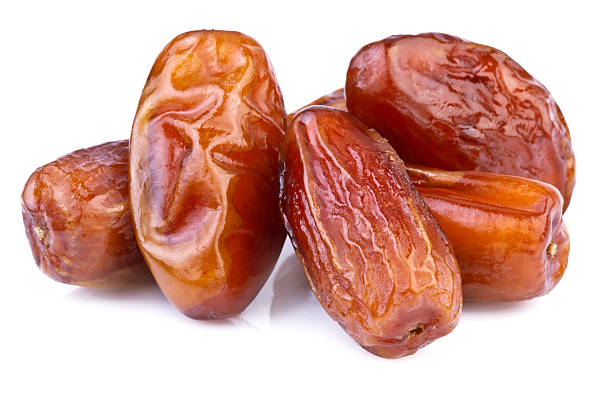
Neither trial used dates. The older version of this post used them in a raw chocolate cake held together by Medjool dates, so it is fair to ask where they would land on the salad scale.
USDA FoodData Central lists Medjool dates at 277 kcal per 100g, which is 2.77 kcal per gram. That is more than double the richest salad in the 2004 trial, at 1.33 kcal per gram, and more than eight times the lightest one, at 0.33. Raw apple with skin, for comparison, has 52 kcal per 100g, or 0.52 kcal per gram.
Any ingredient denser than the salad raises the salad's energy density, so chopped dates push a salad toward the high end, in the same direction as the heavier dressing and extra cheese did in 2004. If the point of the starter is a big, light plate, the dates belong somewhere else in the meal.

The link from the older post
The older version of this post also suggested nuts as a savoury snack. The page it pointed to is still linked here, for anyone who wants to find more information.
Buying dates in Malaysia
Kurma Mariami Malaysia says on its about us page that it supplies dates to consumers, retailers and traders across the country, and that it takes enquiries and orders. The contact form is not available at the moment, so the contact us page gives a WhatsApp number instead. Other articles are on the Kurma Mariami blog.
This article is general information, not personal advice. If you plan a big change to the way you eat, speak to your GP or a dietitian first.