
A daily eating plan has to answer two questions: what goes on the plate, and how much of it. This one handles the second with the British Nutrition Foundation (BNF) portion-size guide. The guide measures food with your hands and a spoon, so you can follow it at a canteen table or a kenduri buffet as easily as at home.
The daily totals behind the plan
The BNF suggests these daily portions for adults: 5 or more of fruit and vegetables, 3 to 4 of starchy carbohydrates, 2 to 3 of beans, pulses, fish, eggs, meat and other proteins, and 2 to 3 of dairy and alternatives.
Its portion sizes are based on 2000kcal a day, which the BNF describes as the amount estimated for an average, healthy adult woman. If you are tall or very active, it says, you may need more. A smaller person, or someone trying to lose weight, may need smaller portions. Hand measures adjust themselves a little too: bigger hands give bigger portions.
The measures, in one table
| Food | Hand or spoon measure | Weight |
|---|---|---|
| Dried pasta shapes or rice | About two handfuls | 75g |
| Breakfast cereal | About three handfuls | 40g |
| Baked potato | About the size of your fist | 220g |
| Chicken breast | About the size of your whole hand | 120g |
| Cheddar cheese | A piece about the size of two thumbs together | 30g |
| Peanut butter | About one tablespoon | 20g |
| Soft cheese | About three teaspoons | 30g |
The BNF says plainly that weighing food is the accurate way to measure a portion. Hands are the practical shortcut for days when a scale isn't nearby.
Breakfast: one starchy portion and one fruit portion
Three handfuls of breakfast cereal is a 40g portion. Pour milk over it and the dairy count has started.
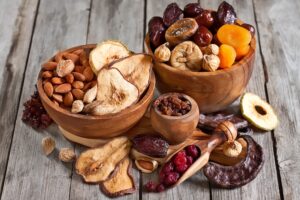
Dates belong at this meal rather than later in the morning. The NHS counts a 30g portion of dried fruit, and it names dates in that list, as 1 of your 5 A Day. It also says dried fruit should be eaten at mealtimes, not as a between-meal snack, to reduce the risk of tooth decay. USDA FoodData Central lists a pitted Deglet Noor date at 7.1g, so a 30g portion is about four of them. A pitted Medjool is listed at 24g, which makes one Medjool a little short of a full portion.
Lunch: rice measured before it is cooked
The BNF gives the rice portion as about two handfuls of dried rice, 75g. Measure it before it goes into the pot, because the weight in the guide is for the uncooked grain. Add a piece of chicken about the size of your whole hand (120g) for one protein portion.
The BNF's message on vegetables and fruit without added sugar, salt or fat is to eat more, and to include them at all mealtimes. So the plate gets vegetables with no hand measure attached.
Afternoon: fresh food in the gap
The BNF suggests vegetables or fruit as snacks. Since the NHS keeps dried fruit to mealtimes, the afternoon snack in this plan is a piece of fresh fruit or some vegetable sticks. A tablespoon of peanut butter (20g) is the measure if you want something to dip them in.
Dinner: the fist and the thumbs
A baked potato about the size of your fist (220g) is the starchy portion. Top it with beans, which sit in the BNF's protein group with pulses, fish, eggs and meat, and a piece of cheddar about the size of two thumbs (30g) for the second dairy portion. Vegetables on the side, and fruit afterwards for pudding, which the BNF also suggests.
Adding up the day
Counted against the BNF totals, this day gives three starchy portions (cereal, rice, potato), two protein portions (chicken, beans), two dairy portions (milk, cheese) and five fruit and vegetable portions (the dates, vegetables at lunch, the afternoon fruit, vegetables at dinner and fruit after it). Each figure sits inside the BNF range.
In numbers, four pitted Deglet Noor dates (28.4g) come to about 80kcal and 18g of total sugars, using the FoodData Central values of 282kcal and 63.4g of sugars per 100g. One Medjool (24g) is about 66kcal and 16g of sugars.
Treats and second helpings
The BNF calls foods high in fat, salt and sugar, such as chocolate, biscuits, cakes, crisps and fried chips, not needed in the diet. If you do include them, it says, keep the portions small and don't have them too often. It also notes that studies show people given bigger portions tend to eat more. So start with the smaller serving and go back for more only if you are still hungry.
If you want the reasons behind the balance itself, the earlier article on healthy eating and the balanced diet covers them. For the dairy portions, which meals have calcium goes through calcium per serving. More about this site is on the About Us page and the contact page.