
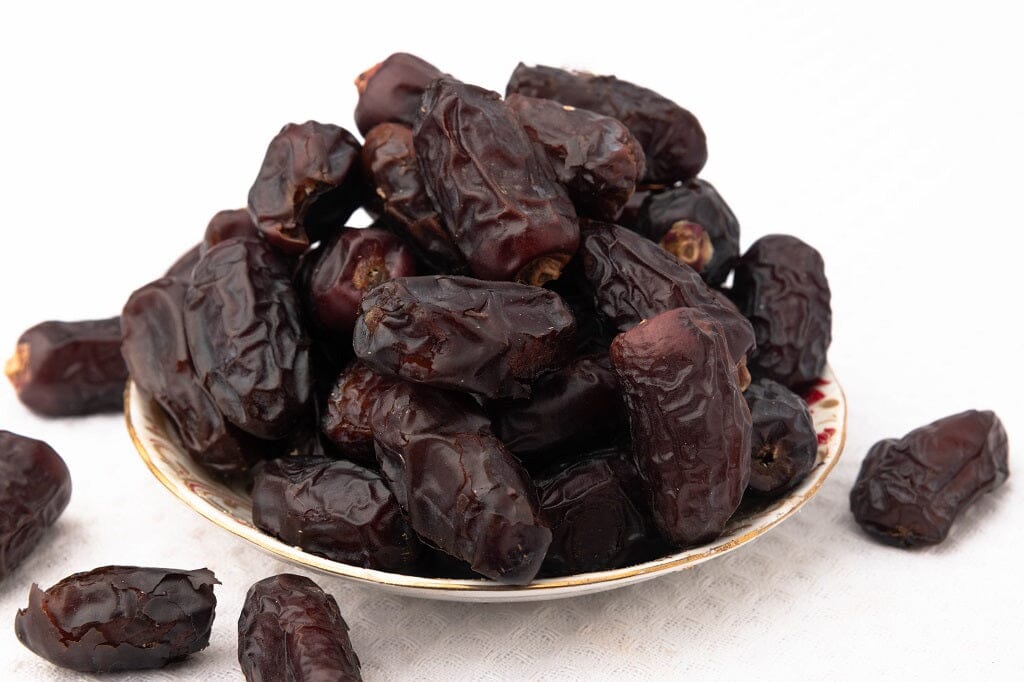
Kurma Safawi, and how it differs from Mariami
Kurma Safawi comes from Madinah, Saudi Arabia. The skin is dark, almost black, but underneath that the flesh is soft and creamy with a caramel-toffee sweetness. That surprises buyers who assume a dark, wrinkled date must be dry — Safawi isn't. Mariami, the Iranian variety this site specialises in, is grown around Bam and Jiroft and is reddish-brown rather than near-black, with a milder sweetness and an equally soft texture. The two aren't competing on softness; they differ in colour, origin and flavour intensity.
Taste and texture side by side
Safawi's sweetness is more concentrated, with that toffee note running right through to the skin. Mariami is gentler and a touch less sweet, which is part of why it works as an everyday date rather than an occasional treat. Neither needs the other to be dry or firm to make sense as a separate product — they're both soft, dark, premium dates that happen to come from different countries and taste noticeably different side by side.
Why size and grade vary between suppliers
Safawi batches vary in size because growing conditions, harvest timing and storage all affect the final fruit, and not every supplier grades before packing. A supplier that sorts into consistent size bands is doing extra work that shows up as more uniform stock on arrival, which is worth paying slightly more for if you're buying to resell rather than to eat yourself. Mariami grading works the same way, so the lesson carries across both varieties.
Buying Safawi if you normally stock Mariami
If your usual order is Mariami and you're adding Safawi to the range, treat it as a separate line rather than a substitute — the two sell to slightly different tastes even though both are soft, premium dates. Check the harvest year on the listing, since Safawi can lose its toffee character if stored badly, the same way an older Mariami batch loses its freshness. Ordering online means reading the variety description closely; photos of dark dates can be mistaken for either variety if the listing is vague.
Checking a supplier's reputation
For either variety, a supplier's own testimonials tell you less than third-party reviews and how they handle a batch that arrives under spec. A supplier that grades consistently and answers questions about harvest timing directly is usually more reliable than one that only offers polished marketing copy.
Storing Safawi at home
Kept airtight in the fridge, Safawi holds its softness for months, the same way Mariami does. Left at room temperature in Malaysia's humidity, it dries out faster and loses that toffee note within weeks. If you keep both varieties, store them separately — Safawi's stronger flavour can carry over to softer, more delicate stock like Mariami if they share a container.
Related reading
For more on the Mariami side of the range, see our guide to cooking with Kurma Mariami AA, and our Medjool pricing notes if you're comparing Safawi against another premium variety.