
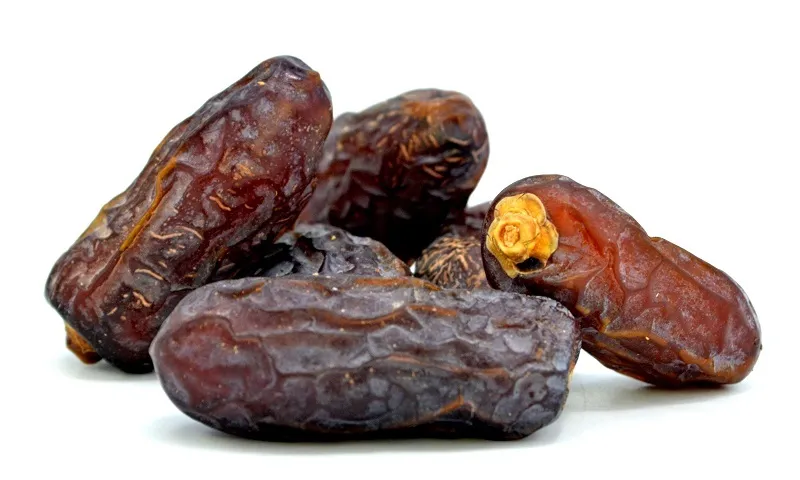
Most people meet dates in a dessert bowl. Kurma Mariami AA is a good example: soft, deep caramel sweetness, the kind of date that gets eaten straight from the box during Ramadan. But that same sugar-and-chew profile does real work in a savoury kitchen once you stop treating it as a garnish and start treating it as an ingredient.
Why dates work outside dessert
A date is concentrated fruit sugar with almost no water left in it, wrapped in a sticky, fibrous flesh. That combination is what makes caramel and dried fruit useful in savoury cooking generally — it browns, it binds, and it cuts through fat and acid. Dates just happen to carry more natural sweetness per gram than raisins or apricots, so a little goes further.
Stuffed and grilled
Pit a date, push in a sliver of hard cheese or a toasted almond, and grill or pan-sear it for a minute until the skin blisters. The cheese should be something salty and firm — feta, a hard goat's cheese, even parmesan — because the date is doing all the sweet work already. Wrap it in a thin strip of beef or turkey bacon first if you want a starter that disappears fast at a gathering.
Braises and stews
Chop three or four dates and drop them into a beef or chicken stew in the last half hour of cooking. They soften completely and dissolve into the sauce, thickening it slightly and rounding off sharp spice without anyone tasting "date" directly. This is the same trick behind Moroccan tagines that pair lamb with dried fruit — the sweetness balances cumin, cinnamon, and chilli instead of fighting them.
Salad add-in
Slice dates thin and toss them into a salad built around something bitter or peppery — rocket, chicory, or watercress. Add a hard salty cheese and a handful of toasted nuts, dress it with lemon and olive oil only, no sweet dressing. The date supplies enough sweetness on its own.
Glazes and marinades
Blend pitted dates with a splash of vinegar, a spoon of mustard, and a little water or stock until it forms a thick paste. Brush that over chicken thighs or a piece of salmon before roasting — the natural sugar caramelises under heat the same way a honey glaze does, but with more body and less runniness.
Savoury rice and stuffing
Dates chopped small work well folded through a rice pilaf with toasted almonds and a pinch of cumin, or mixed into a bread stuffing for roast chicken. They soften as the dish cooks and give pockets of sweetness that break up an otherwise heavy, starchy dish.
Which grade to use
For cooking where the date gets chopped, blended, or cooked down, a softer, cheaper grade is fine — the texture difference disappears once it's in a sauce or paste. Save a firmer, higher grade like Mariami AA for dishes where the date stays whole and visible, such as the stuffed and grilled version above, where its texture and appearance are actually on display.
Dates bought for cooking keep the same way as dates bought for eating: sealed and refrigerated, away from direct heat. If you want more on picking between local and imported varieties before you cook with them, see our note on Malaysian kurma versus imported options, and for a side-by-side on texture, fresh dates against dried dates is worth a read.
None of this needs special equipment. A knife, a hot pan, and a stew that's already on the stove is enough to find out whether savoury dates work in your own kitchen — start with the stuffed version, it's the fastest to get wrong or right in one bite. For dates bought specifically for snacking through Ramadan, the stem-on kurma tangkai is a different, softer style worth trying alongside cooking dates.