
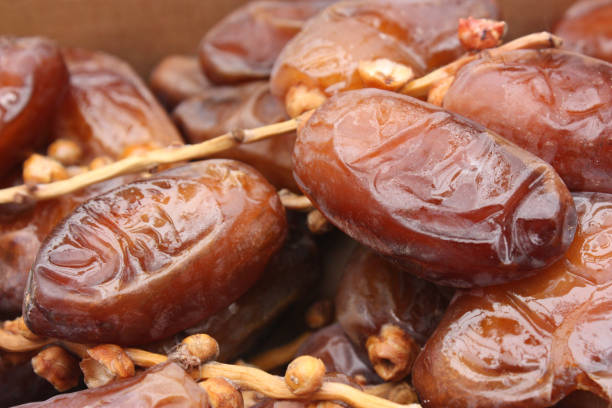
Kurma tangkai means dates still attached to the stalk, the way they grow on the palm rather than loose and pitted. In Malaysia the name gets thrown around for anything sold "on the branch," but the real thing is a specific look: a woody stem with dates clustered along it, often wrapped for transport so the fruit doesn't bruise. During Ramadan it's the one format shoppers ask for by name, even when a loose pack of the same variety costs less.
Part of that is presentation. A bunch on the stalk photographs well and looks like it came straight from the farm, which makes it a natural hantaran or gift item. Part of it is also a genuine (if debatable) belief that fruit left on the stem stays fresher longer, since it hasn't been handled or separated. Kurma tangkai is usually a firmer variety like Deglet Noor rather than a soft one like Ajwa, because a stiff, drier date holds its shape on the branch through shipping. A soft, wet variety would just fall apart.
Why the Ramadan order comes in one big wave
Dates are eaten year-round in Malaysia, but Ramadan compresses most of the annual demand into one month, and tangkai specifically spikes even harder because of the gifting angle. Dates suppliers deal with this the same way any seasonal business does: they place import orders months ahead, based on the previous year's Ramadan sales plus whatever growth they're seeing, and they hold stock in cold storage rather than trying to air-freight fresh batches in during the fasting month itself.
The tighter problem is the tangkai format specifically. A bunch takes up far more box space than the same weight of loose dates, and it's fragile — stems snap, dates fall off the branch in transit, and a bruised or broken bunch sells for a fraction of an intact one. Suppliers who do this well use padded crates and limit how many bunches go in a single box, which raises the shipping cost per kilo compared to bulk loose dates.
What to actually look for when buying
A good bunch has dates that are still firmly attached, not held on by a thread of skin. The stem should be dry and slightly woody, not soft or damp — dampness usually means the bunch has been sitting somewhere humid and mould risk goes up. Colour should be even across the bunch; a mix of very dark and pale fruit on the same stalk often means it was harvested at different ripeness stages and packed together.
Price per kilo for tangkai typically runs higher than the loose equivalent of the same grade, and that gap is the trade-off for the format, not a sign you're being overcharged. If you just want the dates to eat and don't care about presentation, loose is the better buy. If it's going into a hamper or as a gift, tangkai earns its price.
Storing it once you're home
Keep the bunch in a cool, dry spot out of direct sun — a fridge drawer works if you have room, though it will dry the stem out faster. Don't seal it in an airtight bag while the stem still has any moisture in it; trapped humidity is what starts mould at the base of the stalk. Eaten within a couple of weeks it's not an issue, but a bunch bought early for Ramadan and left sitting for a month needs checking every few days.
Outside of Ramadan, tangkai is a smaller, steadier line — mostly gifting occasions and the odd customer who prefers buying dates that still look like fruit rather than a repacked box. For pricing across formats and grades, see our date price guide for Malaysia, and for background on why some varieties carry religious or cultural weight beyond taste, our piece on kurma nabi covers that separately.