
This piece is for people who put dates into boxes for other people: hamper makers, corporate gift sellers, and small shops that pack their own raya sets. If that is you, kurma tangkai is probably on your order list every year, and the way you buy it matters as much as the price.
First, what you are actually ordering
Kurma Tangkai means dates sold still attached to the strand of the bunch. It is a way of packing, not a separate variety. In Malaysia the fruit on those strands is almost always Deglet Noor, grown in Tunisia and to a lesser extent Algeria. Deglet Noor is a semi-dry date, so it sits at room temperature on a shelf without trouble.
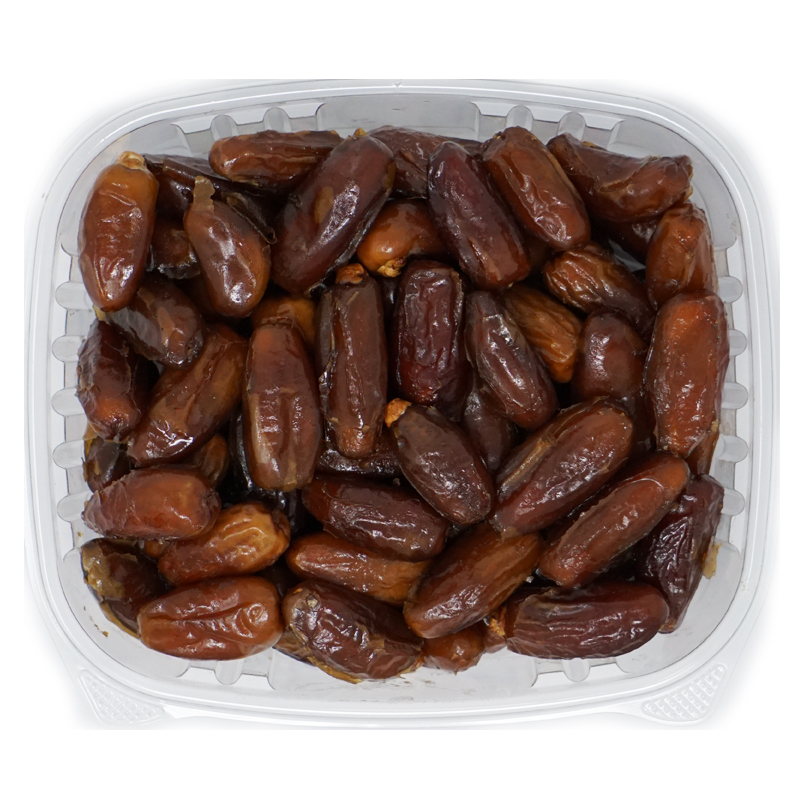
That matters when you write your order. If a supplier offers "Ajwa tangkai" or "Mariami tangkai", ask to see a photo of the actual carton and its label before you pay. Mariami comes from Iran and is sold loose in boxes, which is the format you will find across this site.
Why hamper sellers rarely buy from the importer
An importer works in containers. A hamper business might need 40 cartons for the whole season, or 300 strands for one corporate client. The distributor sits between those two scales. They take the container, hold it, and sell it on in carton lots, so you are not stuck financing stock you cannot move.
That is the plain reason distributors exist, and it is why reputable dates distributors price by carton and by tier rather than by single kilo. Read that guide before you compare quotes, because a cheap quote with a high minimum can cost you more than a slightly dearer one you can actually sell through.
One order, one lot
Here is the part hamper makers learn the hard way. If 200 boxes go to one company, the client expects 200 boxes that look the same. Strands from two different shipments can differ in colour, in how full the strand is, and in how dry the fruit feels.
So ask the distributor to fill the whole order from a single lot, and ask for the lot or batch reference on the delivery note. A good distributor will either agree or tell you honestly that the order spans two lots. Both answers are fine. Silence is not.
Ask for a sample carton
Before a large order, buy one carton at the normal price and open it. Check that the strands are whole, the fruit is dry to the touch and not sticky, there are no small holes or fine powder in the packing, and the label shows origin, packing or expiry date, and the importer's name. If the sample is right, put "same as sample" on your purchase order.
Timing around puasa and raya
Ramadan moves about 11 days earlier each year, so the peak for gift boxes shifts with it. Distributors see the same rush you do, which we wrote about in the Ramadan tangkai rush. Book your quantity in writing weeks ahead, with a delivery date, and agree what happens if they come up short.
Putting tangkai and Mariami in the same box
Many gift sets mix a strand of tangkai with a tray of loose dates. Those are two supply lines, North African and Iranian, and not every distributor carries both. If yours does, one invoice and one delivery save you a lot of chasing. If not, it is worth knowing how a supplier handles after-sales support and replacements before you split the order between two of them. Our notes on choosing date suppliers for a business cover the rest of that checklist.
Whatever you stock, the aim is the same: high-quality dates arriving on the date you were promised, from a lot you have already seen.