
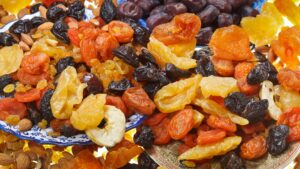
One line on the NHS page about healthy ways to gain weight is easy to skim past: add protein to your meals with beans, pulses, fish, eggs and lean meat. This plan is built on that line. Each meal of the day gets one extra protein food from the NHS list, and breakfast also gets a portion of dates. The extra calories land inside the range the NHS suggests.
The NHS target
The NHS suggests that adults gain weight gradually by adding healthy calories, and that they could try adding around 300 to 500 extra calories a day. Its list of tips also includes eating smaller meals more often, adding cheese, nuts and seeds to meals, and having a balanced diet drawn from a variety of food groups. On the other side of the page it says not to rely on chocolate, cakes and sugary drinks to gain weight.
If you have lost weight suddenly, or without changing what you eat or how much you move, the NHS advice is to speak to a GP first. A food plan comes after that.
How much protein an adult needs
The British Nutrition Foundation (BNF) puts the adult recommendation at 0.75 g of protein per kg of body weight. That works out at 56 g a day for a 75 kg man and 45 g a day for a 60 kg woman. The BNF also notes that in the UK, men eat about 85 g and women about 67 g of protein a day on average, and says it is likely that most people there are getting enough protein.
So the protein foods below are not there because protein is scarce. They are there because the NHS lists adding them among its healthy ways to gain weight, and because they bring calories along with the protein.
The add-ons, meal by meal
These go on top of what you already eat. Every figure is worked out from USDA FoodData Central (SR Legacy) values per 100 g.
| Meal | Add-on | Energy | Protein |
|---|---|---|---|
| Breakfast | 30 g Medjool dates, pitted. | 83 kcal. | 0.5 g. |
| Breakfast | 50 g hard-boiled egg. | 78 kcal. | 6.3 g. |
| Lunch | 80 g canned chickpeas, drained. | 111 kcal. | 5.6 g. |
| Dinner | 75 g canned sardines in oil, drained, with bone. | 156 kcal. | 18.5 g. |
| Day total | All four add-ons. | About 428 kcal. | About 31 g. |
Swaps that keep the day in range
Boiled lentils can take the place of the chickpeas. At 80 g they give about 93 kcal and 7.2 g of protein, and the day drops to about 409 kcal. Roast chicken breast, meat only, can stand in for the sardines: 75 g gives about 124 kcal and 23 g of protein, and the day comes to about 396 kcal. Light tuna canned in oil and drained is closer to the sardines, at about 149 kcal and 22 g of protein for 75 g.
The lowest-calorie pairing, lentils at lunch and chicken at dinner, adds up to about 377 kcal with the egg and dates. All of these versions stay inside the 300 to 500 kcal range.
Why the dates sit at breakfast
The NHS 5 A Day page counts a 30 g portion of dried fruit, such as currants, dates, sultanas and figs, as 1 of your 5 A Day. It adds that dried fruit should be eaten at mealtimes, not as a snack between meals, to reduce the impact on teeth. So the dates go on the breakfast plate next to the egg, not into a mid-morning snack.
The figures above use Medjool, the large, very soft date with a rich caramel taste. Mariami, the dark, semi-dry, chewy date from Iran that this site is named after, has no entry in USDA FoodData Central. A search there returns no results, so this plan gives no calorie figure for Mariami rather than borrowing one from another variety.
Moving as well as eating
The NHS suggests building muscle with strength training or yoga, and says exercise can also improve your appetite. On protein for active people, the BNF says those who do some physical activity, like going for a run or to an exercise class, are unlikely to need any extra protein. By the BNF's account, then, going to an exercise class does not on its own call for extra protein.
For portion sizes measured by hand, including a chicken breast about the size of your whole hand, see the daily healthy eating plan. Sardines eaten with their bones also come up in which meals have calcium. More about this site is on the About us page.
The figures in this post are general nutrition information, not personal advice. A GP or dietitian can help with an individual plan.