
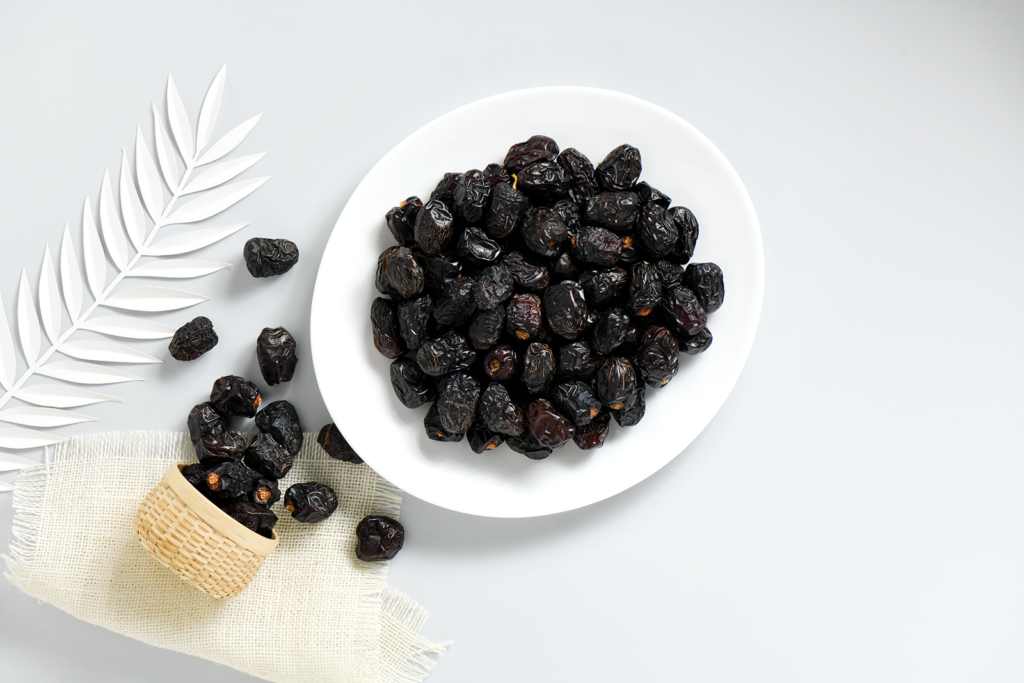
Kurma Nabi and Kurma Mariami: two different dates, often shelved side by side
Kurma Nabi is the market name for Ajwa dates grown in and around Madinah, Saudi Arabia. Kurma Mariami is a separate variety altogether, grown in Iran's Kerman and Bam regions. Malaysian shoppers sometimes assume the two are interchangeable because both are dark, soft dates sold in similar packaging — they aren't, and the differences matter if you're buying by grade or price.
How they actually differ
Ajwa (Kurma Nabi) has a drier, denser flesh and a near-black, deeply wrinkled skin. Mariami is softer and glossier, with a thinner skin and a higher moisture content — closer in texture to Medjool than to Ajwa. Mariami is also graded differently: AA is the top commercial grade sold in Malaysia, distinguished by larger, unbroken fruit with minimal sugaring on the skin, while A-grade covers smaller or slightly marked fruit sold at a lower price point.
Price and origin signal quality
Because Kurma Nabi's supply is limited to the Madinah growing region, it typically carries a higher price per kilogram than Mariami, which is grown more widely across Iran. A seller listing "Kurma Nabi" at a price close to standard Mariami is worth questioning — it's more likely a Mariami or another Iranian variety sold under the more recognisable name. Checking the stated origin against the price is a simple way to catch this before buying.
Storage differs too
Mariami's higher moisture content means it needs cooler storage and a shorter shelf life once opened — refrigeration is worth it if you're not finishing a pack within a couple of weeks. Ajwa's drier flesh keeps longer at room temperature in a sealed container, though both benefit from an airtight seal away from direct sunlight.
Where Ramadan demand fits in
Both varieties see a demand spike ahead of Ramadan, when delivery lead times for premium dates stretch out across the supply chain as buyers stock up for iftar. Ordering Mariami AA a few weeks ahead of the season avoids paying a last-minute premium, the same way it does for Kurma Nabi.
Buying tips for either variety
Whichever you're after: ask for the grade (AA vs A for Mariami; whole vs broken for Ajwa), check the harvest or pack date on the box, and compare price against the stated origin rather than the name alone. For a closer look at how Mariami AA is used beyond snacking, see our guide on incorporating Kurma Mariami AA into cuisine, and for a wider view of how Malaysian date prices are graded generally, see date prices and grading systems in Malaysia. You can also compare current prices across grades before ordering.
Checking a sample before you buy
Ask for a sample from the actual lot, not a stock photo, before committing to volume. Mariami AA should have unbroken skin and even colour across the batch; a mix of shades in the same box usually means multiple harvests were blended together. Ajwa's skin should look matte rather than glossy, since a glossy sheen often signals a glucose coating used to mask older stock. Comparing texture between grades side by side in person is the fastest way to confirm you're paying for what you're getting.