
In the 1990s, researchers at the University of Kuopio in Finland published a series of papers on a strict uncooked vegan diet known as the "living food diet". The papers are old and the groups were small. Three of them, though, measured people who had eaten this way for years, and between them the papers cover both halves of this title: what goes on the plate, and what the measurements showed in long-term adherents.
How to start: what goes on the plate
A 1999 summary of the group's work (Hänninen and colleagues, PMID 10943644) describes living food as "germinated seeds, cereals, sprouts, vegetables, fruits, berries and nuts". Some items are fermented and contain a lot of lactobacilli. The authors call the diet rich in fibre, with very little sodium, and name berries and wheat grass juice as foods rich in carotenoids and flavonoids.
A plate built on that pattern draws on sprouted seeds and grains, raw vegetables, fruit, berries and nuts, with some fermented items.
The second step is to plan for the gaps before they appear. The NHS vegan diet page (last reviewed 5 June 2026) says that without proper planning you "could miss out on essential nutrients, such as calcium, iron, vitamin B12, iodine and selenium". It advises having fortified foods or considering supplements for "vitamin D, vitamin B12, iodine, selenium and calcium". Its B12 sources for vegans are breakfast cereals fortified with B12, unsweetened soya drinks fortified with vitamin B12, and yeast extract and nutritional yeast flakes fortified with vitamin B12. None of those three is on the living food list above, and the Finnish results below show why that gap matters.
What to expect: more vitamins C and E, less selenium
In a 1995 study (Rauma and colleagues, PMID 7491884), 20 middle-aged Finnish women and one man on the living food diet were compared with omnivores matched for sex, age, social status and residence. The vegans' food records showed intakes, as percentages of the US recommended dietary allowances, of:
- 305% for vitamin C
- 247% for vitamin A
- 313% for vitamin E
- 120% for copper
- 92% for zinc
- 49% for selenium
Their blood held more beta-carotene, vitamin C and vitamin E than the omnivores'. That also held in the pairs where neither person took antioxidant supplements, which matters because 11 of the 20 controls used them, against 4 of the 20 vegan women.
The selenium figure is the one to plan around. It is less than half the allowance, and selenium is on both NHS lists above.
What to expect: vitamin B12 falls slowly
A second 1995 paper from the same group (Rauma and colleagues, PMID 7562085) looked at 21 long-term adherents, 1 man and 20 women. They had followed the diet for 5.2 years on average, with a range of 0.7 to 14 years. Their mean serum vitamin B12 was 193 pmol/L, against 311 pmol/L in matched omnivores.
The 16 who ate Nori or Chlorella seaweeds had about twice the serum B12 of the 5 who did not (221 against 105 pmol/L). The authors concluded that some seaweeds eaten in large amounts can supply adequate bioavailable B12. The NHS list of vegan B12 sources does not include seaweed, though.
Nine of the adherents were tested twice, two years apart. Six of the nine showed slow but consistent deterioration in their B12 status over that time. That decline was measured over two years, and it is the reason to have a B12 source in the plan from the start, through the fortified foods or supplements the NHS describes.
What to expect: a different balance of fats
Ågren and colleagues (1995, PMID 7609607) compared blood fats in long-term living food eaters with omnivores. The abstract says the vegan diet contains the same amount of fat as the controls' mixed diet, but more monounsaturated and polyunsaturated fat and less saturated fat. In red blood cells, platelets and serum phospholipids, the proportions of the omega-3 fats EPA and DHA were only 29–36% and 49–52% of those in controls. The ratio of omega-3 to omega-6 fatty acids was about half that of the omnivores.
The NHS names ground linseed (flaxseed) oil, rapeseed oil, chia seeds, shelled hemp seeds and walnuts as omega-3 sources suitable for vegans. Of these, walnuts are nuts, which are on the living food list.
What these studies cannot tell you
All four papers come from researchers at the same Finnish university. The two Rauma studies each had 21 adherents, 20 of them women, and the Ågren abstract does not give its numbers. The 1999 paper summarises the group's own earlier work.
Where Mariami dates fit
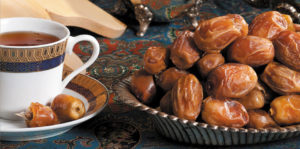
The 1999 description lists fruits but does not name dates, and none of these studies measured them. Mariami is an Iranian variety, dark, semi-dry and chewy. USDA FoodData Central has no Mariami record, so the figures here are for two different varieties. Per 100 g, Deglet Noor has 8.0 g fibre and 63.4 g total sugars, and Medjool has 6.7 g fibre and 66.5 g total sugars.
The NHS 5 A Day page says a 30g portion of dried fruit, "such as currants, dates, sultanas and figs", counts as one portion, and that dried fruit "should be eaten at mealtimes, not as a between-meal snack, to reduce the risk of tooth decay". On a raw plan, that puts a 30 g portion of dates with a meal, not between meals. The grades and pack sizes are covered in the Mariami price and grade guide.
Two other posts here look at raw eating from different sides: a Penn State study on eating a salad before a meal and what a skin study on vegetable intake did and did not test.