
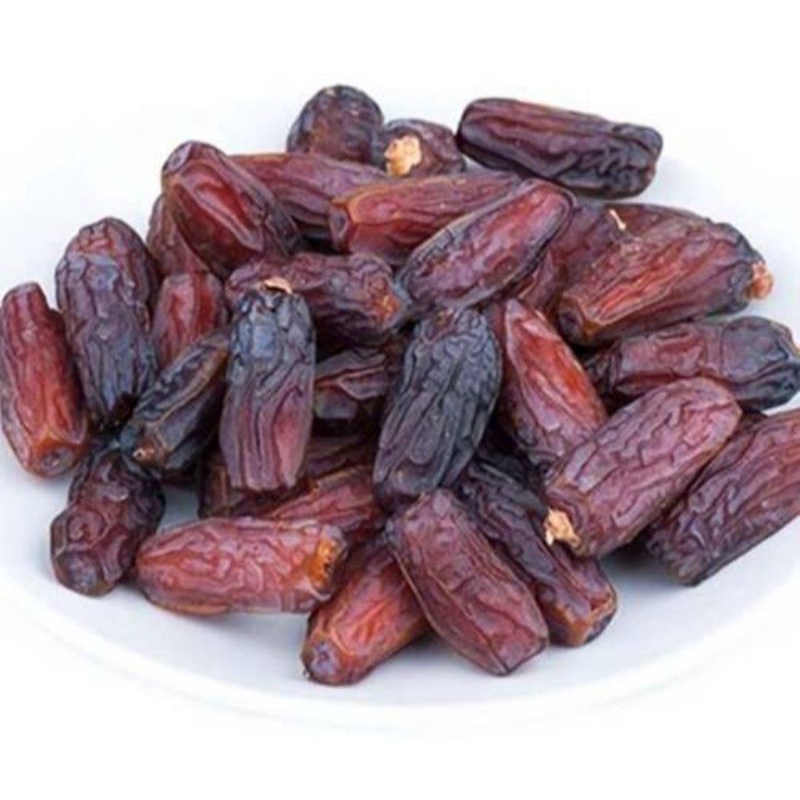
Most people in Malaysia meet Kurma Mabroom on a plate at an open house, picked up next to Ajwa or Safawi and eaten without much thought. That is a pity, because Mabroom behaves differently from the soft dates around it, and those differences matter once you take it into the kitchen. This page looks at Mabroom from the counter top: what it is, how it handles, and where it sits next to Mariami, the date this site is named after. If you only want to buy a box, the short version is at the bottom with a link to Kurma Mabroom Malaysia stock.
What Mabroom is
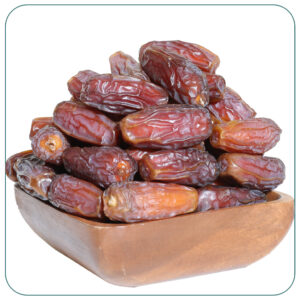
Mabroom comes from the Madinah region of Saudi Arabia. Like every date sold here, it is imported; Malaysia has no commercial date-growing trade, so the carton label should say Saudi Arabia and name the importer. The date itself is long and slender, reddish-brown, semi-dry and chewy. Those four words are the useful part. A soft date such as Medjool or Mazafati gives under your thumb. Mabroom pushes back a little.
None of that is a test for whether a box is genuine. Colour and shape vary between batches and grades, and grades (A, AA, Jumbo and so on) are each importer's own size sorting rather than a shared standard. Trust the label and the seller, not the look.
How a semi-dry date handles in the kitchen
Here is where Mabroom earns its place. Because the flesh is firmer and less sticky than a soft date, it is easier to work with when you need clean pieces.
You can slit one lengthways, lift the seed out, and the date keeps its shape. That makes it a good candidate for stuffing with an almond, a little cream cheese, or a piece of walnut for a hantaran tray, where a soft date would sag by the afternoon. Chopped Mabroom stays as separate bits in a cake batter or a bowl of oats instead of smearing into a paste. On a cheese or fruit board it can be cut into rounds that sit upright.
The trade-off is the other direction. If a recipe wants dates blended into a smooth paste, as in some date balls or a sauce, a semi-dry date needs soaking in warm water for a while first, or you will be scraping the blender. Some cooks simply use a softer date for those jobs and keep Mabroom for anything that is meant to stay in pieces.
Mabroom next to Mariami
Mariami is an Iranian date: dark, semi-dry and chewy. So on paper the two are close relatives in texture, which is exactly why people mix them up when shopping. They are different varieties from different countries. Mariami is darker; Mabroom runs reddish-brown and longer.
In practice they swap in and out of the same kitchen jobs. If you already use Mariami for cooking, as described in our piece on cooking with Kurma Mariami AA, Mabroom will behave in a familiar way. Where it differs is mostly on the plate. Mixed together on one tray, the dark Mariami and the redder, slimmer Mabroom are easy to tell apart, so a mixed tray reads clearly at a glance. For a third, softer contrast, add a few pieces of Kurma Safawi, which is dark and soft.
Keeping an opened box
A semi-dry date is forgiving. An opened box kept in an airtight container in a cool cupboard stays usable for a good while, and the fridge buys more time in Malaysian humidity. Let chilled dates come back to room temperature before chopping; cold ones are harder to cut cleanly. If you are weighing semi-dry against soft stock for a particular use, our note on fresh versus dried dates covers the storage side in more detail.
Buying it
Demand for every date climbs before Ramadan and again around Hari Raya, weddings, kenduri and umrah gift season, so cooking stock is easiest to find and cheapest to plan outside those weeks. Gulf dates are mostly harvested from late summer into autumn, and new-season cartons reach Malaysia some weeks later. If you want ready-made platters rather than a carton for the kitchen, you can find beautifully arranged platters of dates online. For a carton of Mabroom or Mariami for baking and trays, ask us what is in stock this month.